Take care
Green parts, sprouts and green tubers contain solanine — do not eat. Also toxic to dogs, cats and horses.
Potato
Solanum tuberosum
Plant outdoors 2 weeks before your last spring frost. Space plants 12 in (30 cm) apart.
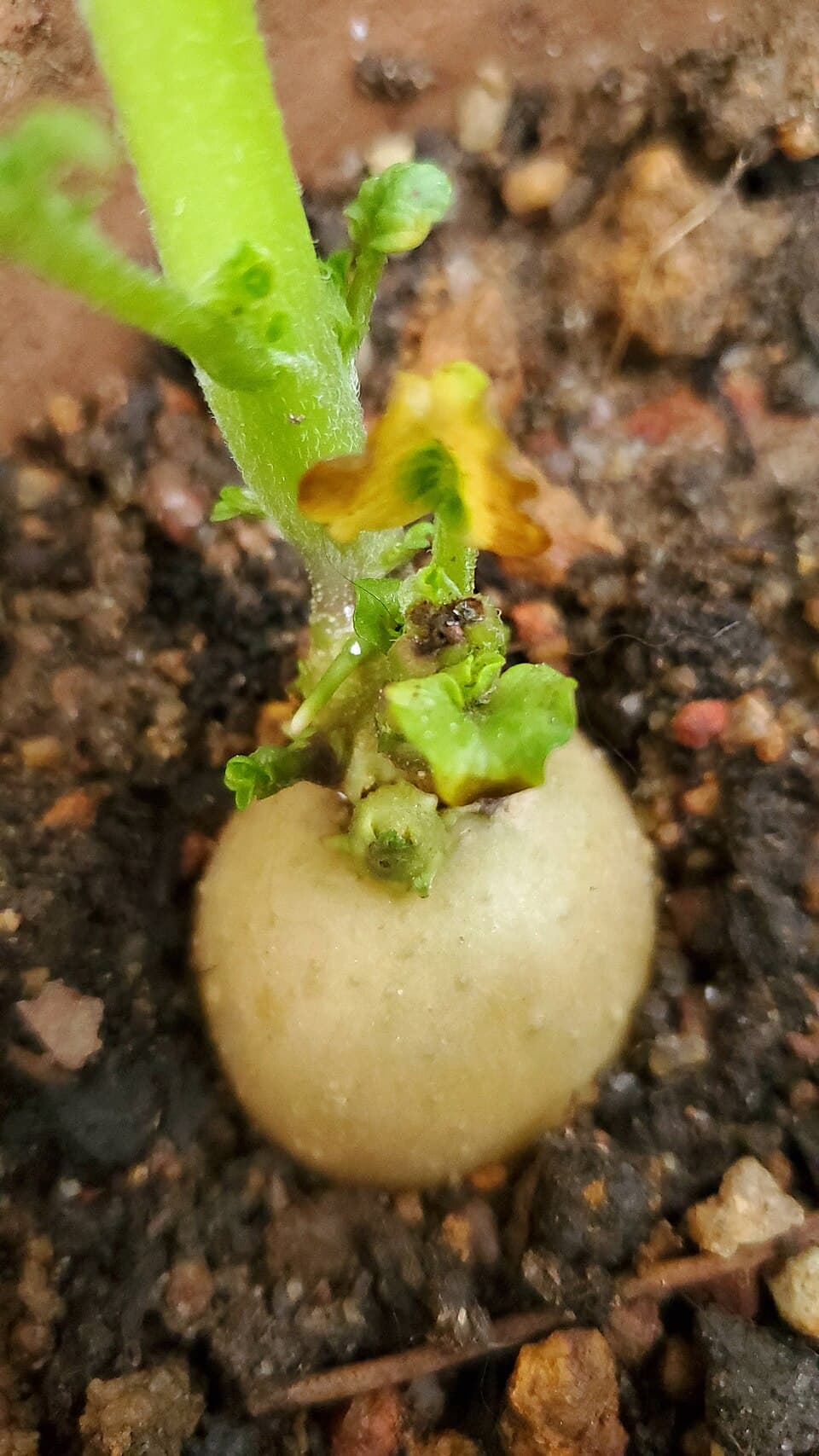
Photo: Arg12730, CC BY-SA 4.0 · source
When to plant
Timed from your frost dates, so it holds wherever you garden. Give yours and every step below becomes a date.
Optimal Spring Direct Sow
RootRecommended- Plant outdoors2 weeks before your last spring frost
- First harvestabout 90 days after planting
Growing potato
- Spacing in the row
- 12 in (30 cm)
- Between rows
- 30 in (76 cm)
- Planting depth
- 4-6 inches
- Sun
- Full Sun
- Soil
- Well-drained, loose, loamy soil. Benefits from organic matter; pH balanced as per profile.
- Germination
- 14-21 days (for sprouts to emerge) at 45-50°F (soil temperature for sprouting)
- Harvest season
- Summer, Fall
- Mature height
- 18-36 inches
- Support
- Hilling
- Life cycle
- Annual
Plant 'chitted' seed potato pieces 4-6 inches deep when soil consistently reaches 45-50°F.
Watering. Maintain consistent soil moisture, especially critical during tuber formation. Avoid waterlogging.
Neighbours
The companion chart → Cabbage
 Corn
 Horseradish
 Nasturtium
 Pea
 Cucumber
 Pumpkin
 Raspberry
 Squash
 Sunflower
 Tomato
Feeding
- Growing
- Apply a balanced, low-nitrogen organic fertilizer (e.g., 5-10-10 or 8-16-16) at planting. Side-dress with compost or additional fertilizer during hilling.
- Flowering and fruiting
- Reduce nitrogen; focus on phosphorus and potassium for tuber development.
- How often
- At planting, then once at hilling; a second side-dressing at the next hilling if growth is pale.
- Note
- Excess nitrogen promotes foliage at the expense of tuber yield. Soil tests recommended.
Your potato, planned to the day.
Canopy turns these timings into dates from your own frost data, places every plant at its spacing on your garden map, and tracks it all the way to harvest.